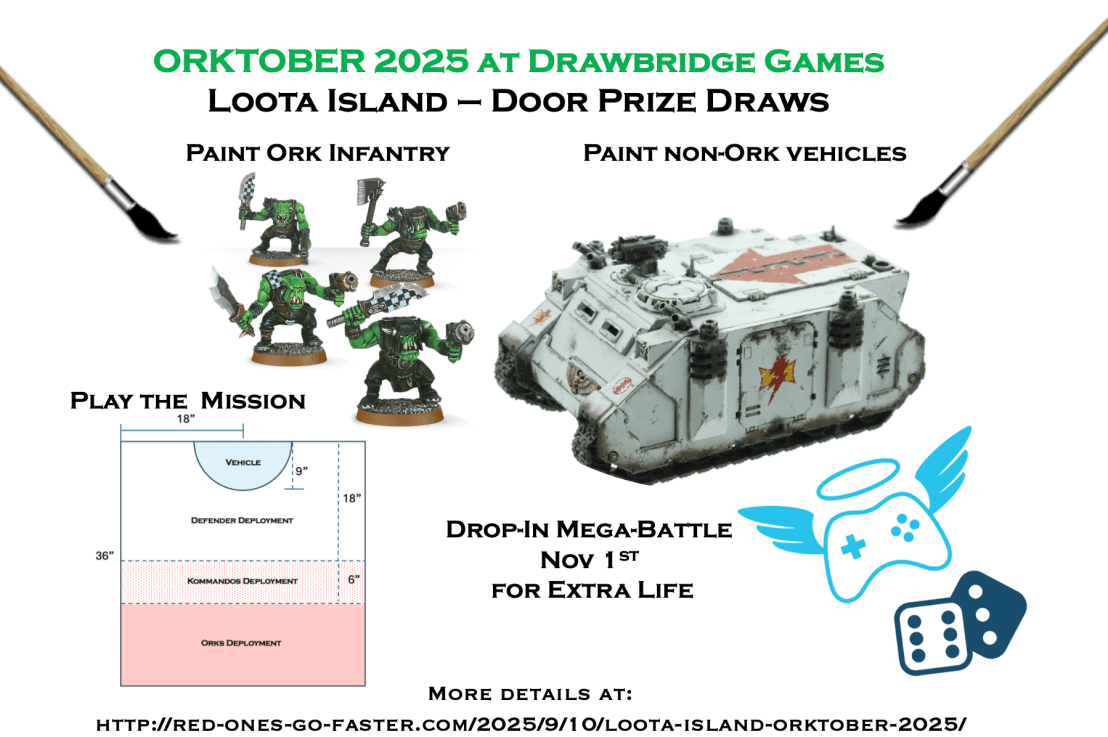
Just a short reminder for folks in the Pittsburgh area that our Orktober 2025 Drop-in Battle happens on November 1st!
Doors at 10am, armies set up and dice by 10:45am. Event will run until 5:00pm.Prizes will be drawn promptly at that timing. Turns will have set times. Players jump in on the turn they arrive. No command points are used; strategems can be used via the Extra Life donations . Orks can call a Waaagh by unanimity of Ork generals, cannot call two turns in a row. Ork units recycle upon death. And both Ork and non-Ork players can use the following Extra life benefits.
Ork players can bring any number of points and models.
Non-Ork players can bring 1,000 point forces drawn from a single detachment for the event, the goal being to kill as many Orks for as long as possible until eliminated, as well as for a secret mission you will get on the day of the event. Non-Ork players can field Imperium, Aeldari, Drukhari, Votann, or T’au detachments.
Extra Life Benefits:
$1 donation to re-roll any single die roll. Allows multiple re-rolls (you can re-roll a re-roll).
$2 per command point. Use any strategem available to your detachment. Can only use each strategem once per round. Also any “costs zero command points” abilities on datasheets still need a minimum donation of $1 to use each time.
$5 scrap your secret mission and draw a new one.
$10 Non-Ork player returns all 1,000 points of their force to the field (effectively a “keep playing” when eliminated).
Prize Drawing Entries
Players get one entry in the drawing for showing up to play. They also get them as follows:
Painted a new Ork unit this month (1 per unit). Painted a non-Ork vehicle this month (1 per vehicle). Fully painted for the event (1 per detachment). Participated in a Skirmish Raid mission during the month of October (1 per game played). Won a Skirmish Raid missions (1 per game won). Killing Ork units (1 draw for every 5 Ork units destroyed, where you got the final damage to remove the piece). Completing secret mission for the day (between 5 and 10 draws–some of these are pretty tough). Bonuses for joining team Ork: 1 for playing on the Ork side for part of the event, and a bonus two entries for fielding at least 300 points of freshly-painted-for-this-event Orks.
For my Dark Sun campaign, this is the flow-chart for how character creation will be conducted. Here are the main rules for the setting and character options for reference: https://red-ones-go-faster.com/2025/09/18/somber-sands-a-dark-sun-campaign/ Keep in mind each player will be drawing up four characters to form a Character Tree. I’ll bring a worksheet (cuz I’m broken that way) that will make the steps hopefully easy for all.
Step One: Roll for Character Connection
Players roll a single d10. This will determine the vague connection between the four characters in your Character Tree–can be as literal or as figurative as you like when you actually plan it out, but for now it will determine the spread of stats for the four characters.
Roll
Connection Source
Starting Stat-Patterns for Your Four Characters
1
Luminary and Friends
Sage, Student, Bright, Unlikely
2
Working Class Chums
Athlete, Wanderer, Physical, Milquetoast
3
Childhood Friends
Rookie, Dilettante, Remarkable, Notable
4
Opposites Attract
Athlete, Sage, Milquetoast, Unlikely
5
Entrepreneurs
Dilettante, Garden Variety, Notable, Balanced
6
Soldiers for Hire
Rookie, Dime-a-Dozen, Remarkable, Balanced
7
Drinking Buddies
Student, Rookie, Physical, Garden Variety
8
Shared Faiths
Wanderer, Dilettante, Bright, Dime-a-Dozen
9
Orphanage
Milquetoast, Unlikely, Balanced, Highs and Lows
10
The Gutter
Milquetoast, Unlikely, Milquetoast, Unlikely
Each stat pattern is determined as per the chart below. Note that physical stats (Str, Dex, and Con) and mental stats (Wis, Int, and Cha) are separated. You can choose any pattern of those three numbers for those three stats. For example, one Rookie well might be Str 15, Dex 12, Con 11, Wis 15, Int 10, Cha 8 while another could be Str 11 Dex 15, Con 12, Wis 8, Int 15, Cha 10.
Typology
Physical (Str Dex Con)
Mental (Wis Int Cha)
Athlete
15 15 15
8 8 8
Sage
8 8 8
15 15 15
Wanderer
15 15 8
15 8 8
Student
15 8 8
15 15 8
Rookie
15 12 11
15 10 8
Dilettante
15 10 8
15 12 11
Physical
14 14 11
13 13 8
Bright
13 13 8
14 14 11
Dime-a-dozen
14 13 11
14 13 8
Garden Variety
14 13 8
14 13 11
Milquetoast
13 13 13
12 12 12
Unlikely
12 12 12
13 13 13
Remarkable
15 14 12
11 10 10
Notable
11 10 10
15 14 12
Balanced
14 12 10
15 11 10
Highs and Lows
14 12 8
14 12 8
Players must “affix” their stat distributions at this point. Decide the pattern for each character–and yes it’s done before you know the species your character will be. You can aim them toward specific classes by varying the pattern (for instance choosing a different higher mental stat for each to allow options across caster classes).
Step Two: Roll for Character Species
Roll, in order, for each of the four now-fixed stat distributions, on the chart below. This will determine the Character Species for that character. Apply the modifiers immediately to ability scores to learn the final ability score set for each character. Yes, this means that you might get a Sage that happens to be a Half-Giant (not exactly a spellcaster type).
Roll % Dice
Species
Apply Ability Score Adjustment
Available Classes Reminder
01-35
Human
+1 to two diff ability scores of choice
Any
36-55
Elf
+2 Dex, -2 Con
Any
56-65
Half-Elf
+1 Str, +2 Dex, +1 Wis, +1 Int, +1 Cha
Any
66-75
Dwarf
+2 Con
All but Wiz
76-80
Mul
+2 Con
Brd, Ftr, Glad, Rgr, Rog
81-85
Halfling
+2 Dex, +2 Wis, -2 Cha
Any
86-90
Half-Giant
+4 Str, +2 Con, -2 Wis, -2 Int, -2 Cha
All but Wiz and Tmp
90-100
Thri-Kreen
+1 Wis, -1 Cha
All but Tmp
Step Three: Determine Starting Classes
Select the starting class for each of the four characters that now have their stats and species decided. Remember that there may be occasion to field any of the four characters at different points, so have fun envisioning each of them. Sometimes a not-so-smart Wizard or a clumsy Rogue can be amazing for adventuring fun. And you can have multiple characters be the same class if you really feel like it (e.g. a Clerical conclave or a Thieves’ Guild). Another way to proceed is to think thematically about the types of classes that might share a mission or commitment to an idea. Note that for any Wizards you must also select Defiler or Preserver at this point.
Step Four: Determine Alignment Axis
All four characters in your character tree must share a similar alignment axis. So you can pick them all to be Good, Neutral, Evil, or Lawful, Neutral, Chaotic. Please do not choose Evil as the shared axis for your tree. All of your characters will share that similar aspect and outlook on the world, but will be flexible on choices from the opposite axis. Also note that Defilers cannot be Good, so any Character tree that has a Defiler cannot choose commitment to Good as an option. You don’t need to lock in the other part for each yet, just need to know what will be common between them all. This can help further flesh out the way that they know one another.
Step Five: Wild Psionic Powers
Most sentient creatures in Dark Sun have a latent, innate psychic power, which some are able to learn to manifest. These powers can emerge at different points in life, all the more varied because of the vast differences in lifespan of different sentient species. Some powers develop in young adulthood but fade with age, while others emerge as a long life progresses. These changes are tied to the ability scores necessary for them to manifest–some of which are simple and others of which are extreme. For each of the four characters in your Character Tree you will roll once on the chart below. That is the latent psychic power that lurks within the character. It doesn’t mean that may be able to use them (or may never be able to use them), but it is what lies dormant inside them.
I’m using the list close as I can to the Wild Psionic Powers from AD&D–which means that some powers are quite minor and some are astonishingly powerful. The more powerful the ability, the higher the ability score requirement to access and use the power. Note that magical augmentation does not unlock psionic ability, so you cannot just pop on an Amulet of Health to meet the requirement. You’ll need to increase the score through regular advancements. It does also mean that loss of that score (to poison or curse or otherwise) may temporarily remove access to using the psionic ability. And there may be moments where it is simply out of reach–Bumbus the Half-Giant Barbarian may never get enough Intelligence to use Time Shift, and that’s just the harsh nature of Dark Sun. Sometimes you die without ever unlocking your true potential.
Most of these take the form of an ability that can be used once per long rest. Variations from that will be noted. Any attack rolls or saving throws associated with them use the relevant ability score bonus for the ability score required to use the power. Unless stated otherwise, duration is a number of rounds equal to the ability score bonus in case of combat effects, and minutes equal to ability score bonus for outside-of-combat effects. And the target is a single PC, NPC, or Monster in most cases.
D100 Roll
Psionic Power
Brief Description
Req. Ability Score
1
No Power
Not everyone is special
–
2-8
Mind Blank*
+2 to all saves vs Wild Psionic Powers
Int <9 or Wis <9*
9-13
Ego Whip
Advantage on loss of control saves (domination, charm, etc.)
Int 8
14-18
Thought Shield
Advantage on mind reading saves (detect thoughts, ESP, etc.)
Int 8
19-23
Mental Barrier
Advantage on Wis saves vs Wild Psionic Powers
Wis 8
24-28
Intellect Fortress
Advantage on Int saves vs Wild Psionic Powers
Int 8
29-33
Tower of Iron Will
Advantage on Con saves vs Wild Psionic Powers
Con 8
34-35
Sensitivity to Psychic Impressions
Gain knowledge of momentous emotions from the past in current location
Wis 10
36-37
Object Reading
Determine psychic impressions left on object by a previous owner
Wis 10
38-39
Animal Affinity
Generally receive friendly reactions from one category of (non-monstrous) animal (some conditions may change this). Roll a d12 on following list when gained to affix the type of animal. 1) Baboons, 2) Bats, 3) Cats, 4) small Beetles, 5) Hawks, 6) Hyenas, 7) small Lizards, 8) Toads, 9) Jackals, 10) Carru, 11) Aprig, 12) Erdlu.
Con 10
40-41
Daydream
Save. Already-bored target becomes less observant
Wis 10
42-43
Empathy
Save. Detect basic emotions.
Wis 10
44-45
Incarnation Awareness
Determines how many times target has been magically raised from the dead
Int 10
46-47
Feel Light
Vision through skin nerves
Int 10
48-49
Feel Sound
Hearing through skin nerves
Int 10
50-51
Hear Light
Vision through hearing
Int 10
52-53
See Sound
Hearing through sight
Int 10
54
Danger Sense
+2 to all Initiative checks
Int 10
55
Know Direction
Always know which way is north
Int 10
56
Know Location
1/long rest get precise descriptor of location
Int 12
57
Spirit Sense
Detect presence of ghosts, poltergeists, and other formless supernatural entities
Wis 12
58
Double Pain
Save. Target experiences double the pain from injuries and may go into shoch
Con 16
59
Heightened Senses
+2 to all Perception checks
Con 14
60
Immovability
Greatly increase weight, cannot be pushed
Con 14
61
Lend Health
1/long rest heal d6 damage in target touched by suffering d6 damage oneself
Con 12
62
Suspend Animation
Hibernate without needs until set time
Con 12
63
Id Insinuation
Save. Target follows its current want
Wis 15
64
Attraction
Save. Target attracted to object indicated
Wis 15
65
Aversion
Save. Target mislikes object indicated
Wis 15
66
Awe
Save. Target is awestruck by user
Wis 20
67
Conceal Thoughts
Hide thoughts from detection
Wis 14
68
ESP
Detect thoughts of target
Wis 15
69
False Sensory Inputs
Cause mistaken sensations
Int 15
70
Inflict Pain
Save. Target perceives pain and may pass out. Is an evil act to use on a living creature
Con 15
71
Invincible Foes
Save. Target convinced that next damage source will be lethal to them
Wis 15
72
Invisibility
1/long rest. Minds of creatures in line of sight cannot perceive you
Int 17
73
Life Detection
Lifesense
Int 12
74
Mind Bar
Immune to possession. +2 on saves vs mind-affecting spells, mind-affecting class abilities, and Wild Psionic abilities of most types
Int 16
75
Phobia Amplification
Save. Reveals target’s phobia, and heightens reaction to said phobia.
Int 14
76
Post-Hypnotic Suggestion
Save. Place a single suggestion with a trigger in target’s mind
Int 15
77
Repugnance
Save. Target is overwhelmed with loathing for a thing and attempts to destroy it at once
Wis 18
78
Send Thoughts
Send thoughts to willing target
Int 12
79
Sight Link
See through eyes of willing target
Con 16
80
Sound Link
Hear through ears of willing target
Con 14
81
Taste Link
Taste through tastebuds of willing target
Con 12
82
Truthear
1/week. Save. Gain knowledge whether target knows it is lying when speaking.
Wis 16
83
Dimensional Door
Create mind-portal that allows transit to distant location
Con 18
84
Time Shift
1/day. Move ahead three rounds through time in a non-interactive state
Int 17
85
Time/Space Anchor
Prevent unwanted teleportation/time slippage (including vs slow spell)
Int 14
86
Clairaudience
Hear sounds occurring at distant spot
Wis 14
87
Clairvoyance
See sights occurring at distant spot
Wis 14
88
Precognition
1/week. Forsee probable outcome of proposed course of future action
Wis 15
89
Detonate
1/week. Target unattended non-magical inanimate object made of wood, stone, glass, or bone explodes and is destroyed. Cannot detonate cloth nor metal
Con 14
90
Disintegrate
1/week. Functions as disintegrate spell but is psionic, and target uses Constitution save to avoid damage
Con 20
91
Telekinesis
1/ week. Functions as telekinesis spell
Wis 18
92
Complete Healing
Enter a 24-hour trance. Fully heal all hit point damage if un-interrupted
Con 14
93
Mindlink
1/week. Communicate with a target you can contact directly with mental connection
Wis 16
94
Fate Link
1/week. Save. Target and user experience same pain sensations. Both lose same number of hit points if one loses hit points. If one dies, the other must make a Con save (DC 10 + dying creature’s Con modifier + 4)
Con 16
95
Domination
1/week. Functions as dominate person spell
Wis 20
96
Mass Domination
1/week. Functions as dominate person spell but affects up to five creatures
Wis 22
97
Mindwipe
1/month. Save. Psychic surgery that reduces target’s Int and Wis scores.
Wis 22
98
Probe
1/month. Save. ESP that can dig far deeper.
Wis 22
99
Switch Personality
1/month. Save. Exchange bodies with target.
Con 22
100
Synaptic Static*
Interferes with psionic abilities of those in proximity.
Wis <9 and Int <9*
*Mind Blank and Synaptic Static are two exceptions, as they have a maximum threshold of ability score. For Mind Blank either Wis or Int must be 8 or less. For Synaptic Static, both Wis and Int must be 8 or less. If the ability score rises above this threshold the power is lost.
The descriptions of each are somewhat brief, as I do not want to map out the exact function of every single 2nd edition psionic power. We’ll verify the exact functioning of every power that is rolled for characters that compose your Character Trees.
Step Six: Select Active Character for First Session and Flesh them Out
Of your four character tree characters, choose which will be active for the first session. The other three will be somewhere else, but they all know each other somewhat and have some vague commitment to the same goals in life and adventuring. We’re done with the inactive characters for now–you can work through the specific choices for them as adventurers (e.g. spells taken and skills chosen) in-between games.
Now go through all the starting character choices about your active character to make them level 2: list other racial bonuses, skills chosen, spells selected, etc. Note that we’ll roll for all hit dice beyond the first one together (which is always the maximum amount) to generate hit point maximums. If you choose to play a Templar, have a quick discussion with the DM about how that will operate and what Dragon King you have begun service under.
Step Seven: Determine Starting Gear as Lead-In to Game
Initial gear will be determined amidst gameplay, so we’ll start with character introductions and I’ll get the game moving for our first session of play in Dark Sun.
[If there is any step I realize I forgot when making the worksheet, I’ll update… but hopefully this can give those of you spinning your brain with character ideas a bit more sense of what will happen]
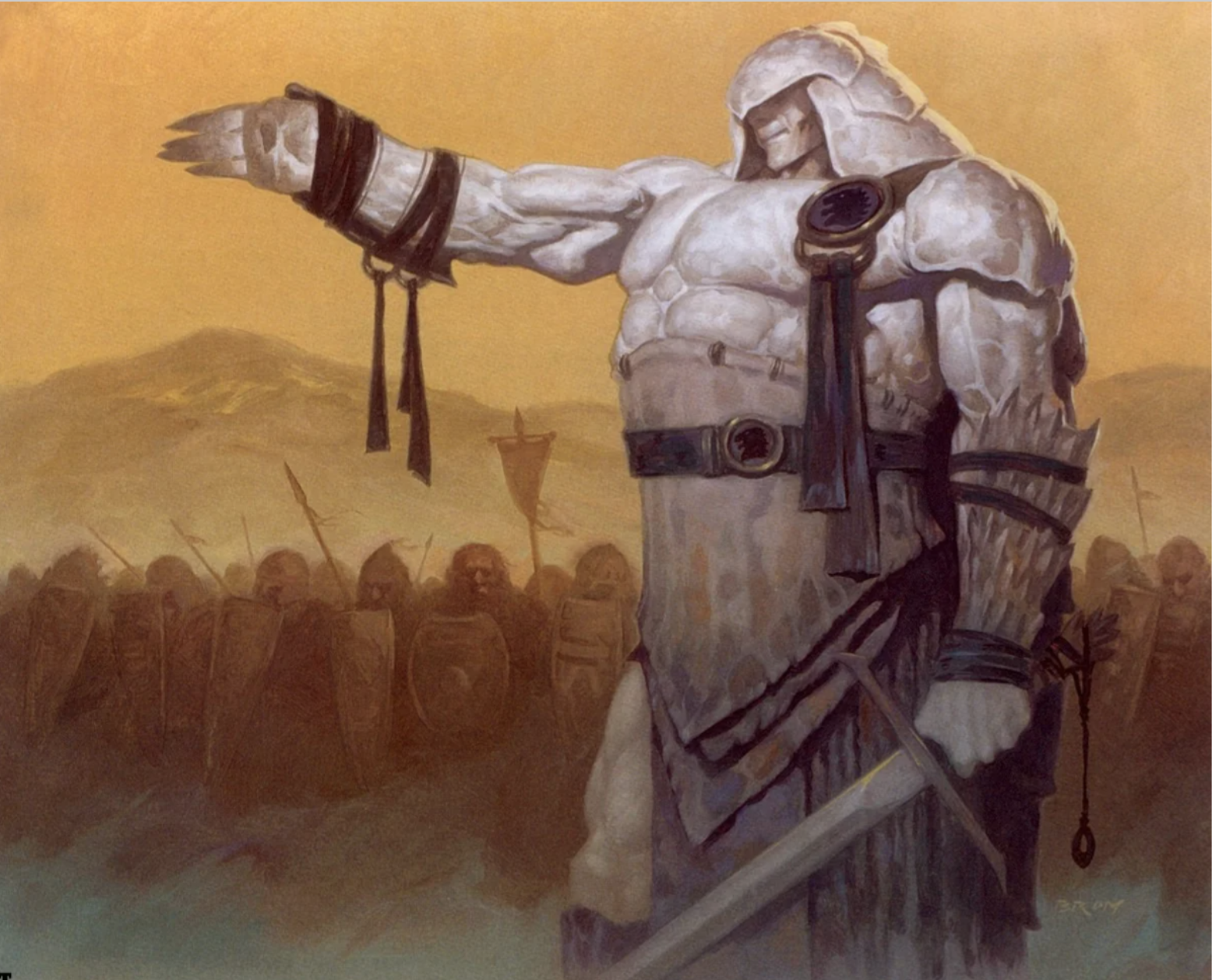
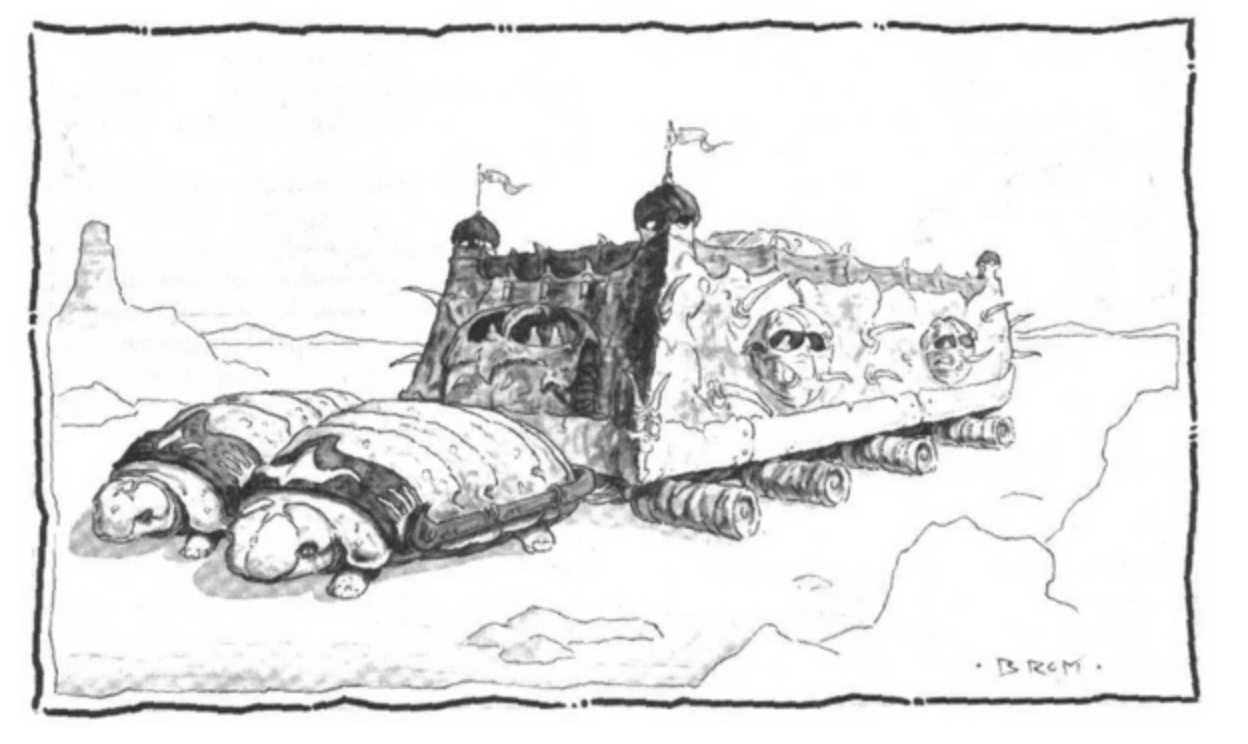
This is the campaign guide for a Dark Sun-based Dungeons and Dragons game I’m running. The images are from the classic Dark Sun resources of Second Edition Advanced Dungeons and Dragons (which I’ll shorten to just AD&D forward), which is what I’m basing it on. If a Fifth Edition (5e) version of Dark Sun rules get released I’ll review them and we can see about converting over. These rule adjustments are designed to capture the spirit of the AD&D rules while giving us the actually playable 5e basis for our gameplay. There will be a separate post with the character creation guide, this is more the rules changes for the campaign.
Start Here: A Great Overview of Dark Sun
This video does a great job giving all the info you need to know about the Dark Sun world in 8 minutes–no rules content, just the basics of the campaign setting’s feel. Mandatory viewing for players. The only change is that I’ll pronounce Thri-Kreen different than he does.
Starting Levels and Character Trees
Dark Sun is a purposefully harsh campaign, and I’m going to run it that way. The rules for it in AD&D included the suggestion of starting as higher level characters than level one (as anyone surviving would have to be somewhat skilled). So we’ll be starting all characters at level 2. And more importantly, Dark Sun very purposefully included the use of Character Trees, which I’m going to use as well. Each player in our first session will roll up four characters that will form their character tree. They will then choose which of the four will be their “active” character at first, while the other three will be “inactive”. Between some sessions of the game players can then swap to other characters in the tree. Each time an active character gains a level, one inactive character in the player’s tree gains a level. It’s designed to play out in interesting ways in the campaign and gives some flexibility if there is a character death. Inactive characters are neither NPCs nor followers. They generally do not come into contact with the campaign world while inactive (they just are doing something else). The characters in the character tree know each other somehow, and are working toward similar ends. Each player can decide what that connection is as they flesh out the four characters on their tree between sessions.
Peoples, Classes, and Latent Psychic Powers
Dark Sun has the following character species to choose as player characters: Humans, Elves, Half-Elves, Dwarves, Muls (sterile half-dwarves bred for labor), Half-Giants, Halflings (who yes, are cannibals), and Thri-Kreen (human-sized preying mantis people). Aasimar, Tieflings, Dragonborn, Goliaths, and Gnomes are not used. There will be some limits on what classes can be chosen based on the race of the character (and race will be rolled for randomly on character creation, along with starting stats). See the chart below for differences.
Species
Base Species and adjustments from PHB
Available Classes
Human
Human. Use the variant trait as listed (Increase only two ability scores by 1; but gain proficiency in one skill of choice and gain one feat of choice).
Any
Elf
Elf. Adjust Ability Score Increase to +2 Dex, -2 Con. Remove “Fey Ancestry”. No Subrace is chosen. Gain Advantage on all Stealth checks. Height is between 6.5’ and 7.5’.
Any
Half-Elf
Human. Adjust Ability Score increase to +1 Str, +2 Dex, +1 Int, +1 Wis, +1 Cha. Gain “Darkvision” as per Elf entry. Gain advantage on all Animal Handling checks. May befriend an animal they meet in-game as a pet/companion.
Any
Dwarf
Dwarf. All are Hill Dwarf subtype. Remove “Dwarven Combat Training” and “Stonecunning”. Tool Proficiency can be any artisan tool set of choice.
Human. Replace ability score increases with +2 Con. Add “Dwarven Resilience” and “Darkvision” as per Dwarf entry. Hairless. Sterile.
Bard, Fighter, Gladiator, Ranger, Rogue
Halfling
Halfling. Adjust Ability Score increase to +2 Dex, +2 Wis, -2 Cha. No Subrace is chosen. Remove “Lucky” and “Brave”. Willing to eat sentient creatures outside of their tribal affiliation.
Any
Half-Giant
Human. Replace ability score increases with +4 Str, +2 Con, -2 Int, -2 Wis, -2 Cha. Can choose Hit Dice result rather than rolling for HP as follows: d4=4, d6=5, d8=7, d10=8, d12=10. Height is between 8’ and 9’. Half of alignment is fixed, other is chosen after each long rest based around current whim. Require 4 gallons of water per day.
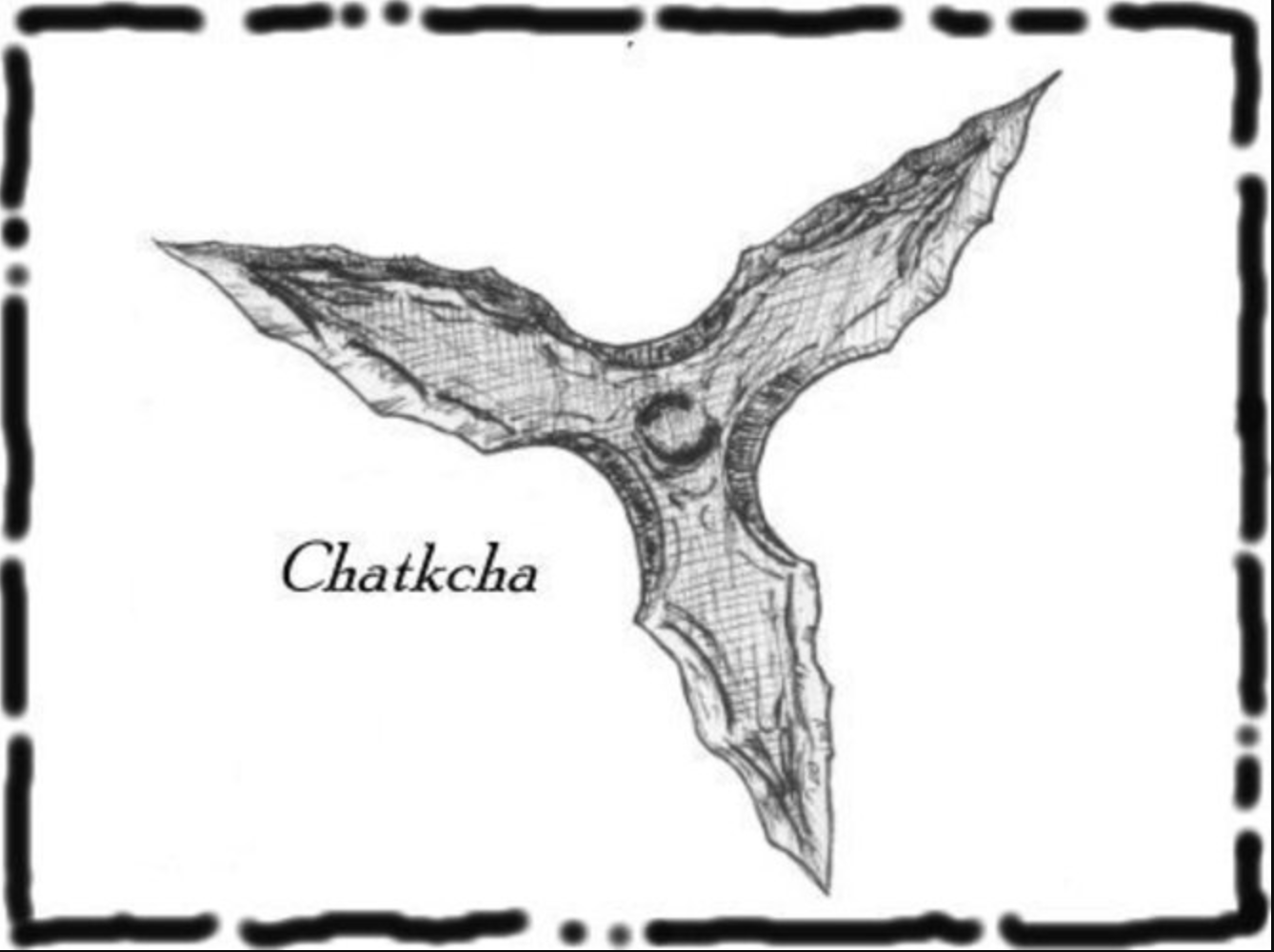
Unique. Ability Score increase +1 Wis, -1 Cha. Has +2 Natural Armor bonus. Unarmed attack 1d4+Str damage. 4 limbs affect what can be carried in combat (including using a shield and a 2-handed weapon at same time). Advantage on Athletics checks when Jumping. Does not need to actually sleep while performing a long rest, regardless of class. Water checks are by the week not by the day for Thri-Kreen. Proficient with the chatkcha (a crystal throwing wedge, see equipment below). May be unable to use certain magical items given body shape. Willing to eat sentient creatures, particularly like the taste of elves.
Classes have somewhat different names in Dark Sun, and some have variations from their basic versions. Paladins, Monks, Sorcerers, and Artificers do not exist in this setting. And there will be some subclasses that cannot be accessed or are considerably adjusted given the setting. Wizards (and some other subclasses) in particular are interesting as they need to choose whether they are “Defilers” or “Preservers” in addition to their other class abilities (which will have its own rules in the Magic section below).
Dark Sun Class
Base Class
Setting Adjustments
Bard
Bard
Mostly unchanged. All spells and supernatural class abilities are considered Psychic powers. Available Bard Colleges: Lore, Valor, Whispers. College of Whispers only available via connection to a Dragon King.
Cleric
Cleric
Somewhat changed. There are no gods. Deities are the four elements Earth, Air, Fire, and Water, and domains are based around them (see Magic Section for full details of each domain). Add a single weapon to proficiency list based around fit to your element (e.g. blowgun for Air).
Druid
Druid
Somewhat changed. Must be Circle of the Land as subclass choice. Can choose Desert, Scrubland (counts as Forest), Grassland, Mountain, Silt Sea (counts as Coast), or Salt Flats (counts as Swamp). They then pick a specific spot of that type in the world as their “Guarded Lands” which they are obliged to watch over and revisit on occasion. Wild Shape options list appears in the Magic section below (the usual “need to have seen it” applies).
Fighter
Fighter
Mostly unchanged. Available Subclasses: Battle Master, Cavalier, Champion, Psi Warrior. Can also select Eldritch Knight, but must choose either Defiler or Preserver (see Magic section).
Gladiator
Barbarian
Mostly unchanged. Available Subclasses: Berserker or Totem Warrior. Berserker functions as written. Totem Warrior is changed in name to “Arena Trained” and has the following substitutions. “Spirit Seeker” and “Spirit Walker” are each replaced by selecting a bonus feat that represents a fighting manuever or style. “Totem Spirit” is changed in name to “Fighting Style”. Bear is renamed “Brute”, Eagle is “Daring”, and Wolf is “Coordinated” but effects at 3rd and 6th level are unchanged (tho the 6th level ones are not supernatural but just result of training). The “Totemic Attunement” Eagle (“Daring”) ability is replaced by gaining advantage on all Athletics checks.
Ranger
Ranger
Mostly unchanged. Cannot select Dragons as favored enemy. Favored terrain options for “Natural Explorer” ability are Desert, Scrubland (counts as Forest), Grassland, Mountain, Silt Sea (counts as Coast), or Salt Flats (counts as Swamp), and remove the “find twice as much food when foraging” portion. Ranger spells and supernatural abilities are considered Psychic powers. Subclass choices: Hunter, Beast Master (same list as Druid Wild Shapes), Monster Slayer, Swarmkeeper.
Rogue
Rogue
Mostly unchanged. Subclass choices: Thief, Assassin, Inquisitive, Scout, Mastermind, Soulknife. Can also select Arcane Trickster but must choose Defiler or Preserver (see Magic section).
Templar
Warlock
Greatly changed. Warlock patrons in Dark Sun are one of the existing Dragon Kings, and Templars serve as their disciples. Choosing this class will have big effects on character gameplay, as in addition to leveling up a Templar gains certain rights within their Dragon King’s domain (e.g. pass judgment on slaves at low levels, accuse freemen or even nobles at higher levels, can keep a certain number of people imprisoned, etc.). That comes with the cost of adherence to the Dragon King’s wishes. All the Templar’s magic abilities can be removed if the Dragon King Patron chooses to remove them. The player and the DM will work out which Dragon King is the patron source of power after initial character creation, which will have a specific custom set of Patron powers associated based on which Dragon King is served.
Wizard
Wizard
Greatly changed. Must choose Defiler or Preserver. Subclass choices must be one of the Schools of Magic from the Player’s Handbook. Any subclass abilities that have spell-like effects also trigger the Defiler rules when that path is chosen (rough idea is that spell level equivalent is highest spell level known at level when that ability is acquired).
Finally every character in Dark Sun is minorly psychic in some way. There will be a chart in character creation that will add a psychic ability to each character as a bonus ability they have in addition to Character Species and Class rules.
Magic in Dark Sun
The following section contains the various adjustments to magic and spellcasting in Dark Sun.
Defilers and Preservers
Arcane magic in the world of Dark Sun is linked to the devastation of the lands. Power can be had at the cost of furthering the devastation, or care can be taken at the price of lessened arcane ability. Arcane spellcasters (primarily Wizards) must choose to either be a Defiler or Preserver. Choosing Defiler means learning a mode of magic where earth and life crumbles as you draw the power of spells. Choosing Preserver means not having those impacts on the world, but reducing progress as learning the exact arcane geometry of magics in a way that does not destroy the world takes much more care and effort.
Preservers can cast their spells (including cantrips) without affecting the world around them. However, they progress slower than a Defiler does within the same time frame and effort. As such, their Spells Known and Spell Slots per Spell Level are treated as if they are two levels lower than their character level. This means 1st and 2nd level Preserver Wizards can only use cantrips. The same for 3rd and 4th level Eldritch Knights and Arcane Tricksters. For purposes of spell effects, their caster level is also treated as two lower when it comes to adding caster level to results and durations. There are rumors that Preservers have a form different from but akin to that of Dragon Kings (see below), but research would need to be done into that. Finally, the lure of a Defiler’s ease in raw magical power is strong. A Preserver can choose to, at any time, swap to being a Defiler. Their spell effects and spell slots per level normalize immediately. They can learn one new spell each long rest to get caught up (representing the ease in working out Defiler magics). However, once they make this fateful choice it is hard to turn back. Characters cannot switch back to Preserver without a significant undertaking to right the balance in their soul they have defiled with this choice–the DM can work with a player interested in gaining Preserver status to find a suitable quest to do so.
Defilers on the other hand gain spells known and spell slots per level at the normal pace, and use their normal caster level. However, the action of casting their spells draws magical energy from the plants in the vicinity to fuel their arcane power. When a Defiler casts a spell, all vegetation in a sphere around them turns to ash. The radius depends on vegetation density and the level of the spell. The number in the chart below shows the radius in 5 foot squares around the Defiler where all vegetation is turned to ash. For instance, a 3rd level spell cast in Salt Flats terrain would consume plant life for ten 5 foot squares in every direction.
Terrain Type
Spell Level –>
1
2
3
4
5
6
7
8
9
Stony Barrens
6
8
10
12
14
16
18
20
22
Sandy Wastes
6
8
10
12
14
16
18
20
22
Rocky Badlands
6
8
10
12
14
16
18
20
22
Salt Flats
6
8
10
12
14
16
18
20
22
Boulder Fields
6
8
10
12
14
16
18
20
22
Silt Sea
6
8
10
12
14
16
18
20
22
Mountains
6
8
10
12
14
16
18
20
22
Scrub Plains
3
4
4
5
5
5
5
6
6
Verdant Belts
2
2
2
3
3
3
4
4
4
Forest
1
1
2
2
2
2
3
3
3
Casting additional spells in already-defiled locations increases the radius. Calculate the radius of the highest level spell cast, then for each additional spell cast in within that area add the additional radius to the total for a general sense of how much terrain turns to ash. Six third level spells would consume and entire football field of plant life from a Sandy Waste.
Defiled spaces do not just affect plants, but also all living creatures. All non-Defiler living creatures in the radius of effect when a Defiler spell is cast suffer a reduction in actions during their next activation–they are limited to a single action for that next activation. Additional Defiler spells that enlarge the area do not have this same effect. It only happens the moment when the square that a character is standing in becomes ash. That includes moving and bonus actions: only one action can be performed. In addition, death saves suffer Disadvantage for characters standing (well, usually laying) on or above defiled ground. Keeping a Defiler at arm’s length is a good plan, whether ally or enemy.
Defiling is often a crime in many settlements, or tightly restricted. The Dragon Kings are rumored to all be Defilers, and there may be something about defiling and their nature that could be uncovered in the course of gameplay. Even where it is not a crime, Defilers are regarded with a mix of mislike through sheer hatred. “Such is the burden of power” they might whisper to themselves.
Cleric Domains: Fire
Level
Ability
1
Inner Warmth: Immune to the effects of heat exhaustion, including the effects of wearing metal armor. Does not change need for daily water consumption.
2
Channel Divinity (Fire): Water Creatures can be turned/destroyed like undead
6
Elemental Harmony: Immediately add Ignan to list of languages. Can use Charisma skills on Fire elementals. Halve all fire damage suffered.
8
Elemental Weapons: Non-wooden weapons you wield become imbued with fire, adding an additional d6 of fire damage to all successful attacks.
17
Elemental Apotheosis: You begin to take on the form of a fire elemental. Details can be revealed upon in-game research.
Domain Spells: Fire Bolt (Bonus Cantrip), Burning Hands and Flame Blade (1st), Flaming Sphere and Protection from Energy (3rd), Fireball and Fire Shield (5th), Wall of Fire and Delayed Blast Fireball (7th), Shapechange [into fire elemental only] (9th)
Cleric Domains: Water
Level
Ability
1
Waterbearer: Can go one week without water rather than one day (if the Cleric is Thri-Kreen it can instead go one month without water). Does not change the effects of heat exhaustion.
2
Channel Divinity (Water): Fire Creatures can be turned/destroyed like undead
6
Elemental Harmony: Immediately add Aquan to list of languages. Can use Charisma skills on Water elementals. Halve all cold damage suffered.
8
Elemental Weapons: Weapons you wield become imbued with cold, adding an additional d6 of cold damage to all successful attacks.
17
Elemental Apotheosis: You begin to take on the form of a water elemental. Details can be revealed upon in-game research.
Domain Spells: Chill Touch (Bonus Cantrip), Fog Cloud and Grease (1st), Protection from Poison and Misty Step (3rd), Sleet Storm and Ice Storm (5th), Wall of Ice and Otiluke’s Freezing Sphere (7th), Shapechange [into water elemental only] (9th)
Cleric Domains: Earth
Level
Ability
1
Ground Sense: Gains Blindsight (30’) that functions against anything touching or moving along the ground/stone.
2
Channel Divinity (Earth): Air Creatures can be turned/destroyed like undead
6
Elemental Harmony: Immediately add Terran to list of languages. Can use Charisma skills on Earth elementals. Halve all damage suffered from stone weapons. Halve all falling damage.
8
Elemental Weapons: Weapons you wield become imbued with a cloud of hovering rocks, adding an additional d6 of bludgeoning damage to all successful attacks.
17
Elemental Apotheosis: You begin to take on the form of an earth elemental. Details can be revealed upon in-game research.
Domain Spells: Shillelagh (Bonus Cantrip), Longstrider and Pass Without Trace (1st), Spider Climb and Meld Into Stone (3rd), Stoneshape and Stoneskin (5th), Flesh to Stone and Move Earth (7th), Shapechange [into earth elemental only] (9th)
Cleric Domains: Air
Level
Ability
1
Breath of Giants: Can hold breath for one hour. Can extinguish a small flame (up to size of torches) as a bonus action.
2
Channel Divinity (Air): Earth Creatures can be turned/destroyed like undead
6
Elemental Harmony: Immediately add Auran to list of languages. Can use Charisma skills on Air elementals. Halve all thunder damage suffered.
8
Elemental Weapons: Weapons you wield become imbued with electricity, adding an additional d6 of thunder damage to all successful attacks.
17
Elemental Apotheosis: You begin to take on the form of an air elemental. Details can be revealed upon in-game research.
Domain Spells: Shocking Grasp (Bonus Cantrip), Jump and Thunderwave (1st), Gust of Wind and Levitate (3rd), Gaseous Form and Lightning Bolt (5th), Passwall and Chain Lightning (7th), Shapechange [into air elemental only] (9th)
Wild Shape and Animal Companions can be chosen from the following list: Baboon, Bat, Cat, Giant Fire Beetle, Hawk, Hyena, Jackal, Lizard, Scorpion, Toad, Vulture, Erdlu (think Emu), Carru (think Bison with Camel humps), Kank (think Horse, but as a Bug), Aprig (think Pigs but with shells).
In addition, there are some magic spells that simply do not exist or work differently in the Dark Sun setting. This will be the basic list from the player’s handbook, but check any spells that have water effects, extra-planar effects, or that create objects with the DM before selecting them.
Limited precipitation. Temperature can only range between Unbearable Heat and Cool.
Create or Destroy Water (1st level)
Can only destroy water. Considered an evil action by all sentient races.
Create Food and Water (3rd level)
Can only create food, not water.
Creation
Cannot create Adamantine or Mithral. Metal objects have a duration of 1 minute rather than 1 hour.
Detect Magic
Also detects psionic spells and abilities
Entangle
Only works in areas with reasonable scrub. Defiling in the area immediately ends this spell.
Find Familiar
Limited to Bat, Cat, Toad, Hawk, Lizard, or Scorpion
Fog Cloud
Duration limited to 1 minute per level
Goodberry
Does not exist
Hallucinatory Terrain
Targets get advantage on Intelligence checks to disbelieve water-based terrain illusions
Mirage Arcane
Targets get advantage on Intelligence checks to disbelieve water-based terrain illusions
Planar Ally
Does not exist
Planar Binding
Does not exist
Plant Growth
Half effect (50-foot radius and plant life becomes simply normal not overgrown). Cannot be used on Defiled ground.
Reincarnate
Different Table is used
Tsunami
Does not exist
Wall of Ice
Duration limited to 1 minute per level
Skills in theDark Sun Setting
In addition to the regular skills, Dark Sun has a couple of specific skills that are added to each character sheet. Any character class can select these skills as their chosen skills to receive the bonus when gaining proficiency. Given the expanded pool, all character classes get one additional skill from their class list or these skills to receive the proficiency bonus at first level.
Bureaucracy (Cha): Helps characters navigate the rules and abuses of political systems of the City States of the Dragon Kings.
Heat Protection (Wis): Represents a character using clothing and personal pacing to optimize endurance against heat. Successful checks can halve the needed amount of water per day for a character, and can offset wearing metal armor.
Somatic Concealment (Dex): In a world where spellcasting is sometimes illegal and sometimes unwelcome, being able to disguise the motions of casting spells can be important. This skill can allow spell casting to go undetected more effectively. Notably this roll is one not made by the characters, but made by the DM.
Water Find (Wis): Represents a character being particularly skilled at getting every possible bit of water from their environment–from catch nets to filters to the right desert tubers with a few drops of water in them, this skill helps find enough water to survive.
The Dark Sun Economy: Ceramic Bits, Rare Metals, and Piecemeal Armor
The rarity of metal in Dark Sun affects the economy in which the adventurers participate. The monetary system is based on Ceramic Pieces (cp), which are baked in specific molds with certain glazes to stop forgery. The exchange rate of ceramic pieces is 100cp = 10 sp = 1 gp = 1/5 pp. Ceramic pieces are themselves grooved to be broken into Bits, with 10 Bits making one Ceramic. In addition the rarity of metal means metal coins themselves distort value. When buying items, anything non-metal costs 1% of the price listed. However all metal items costs the price listed. A bedroll is normally 1 gp, so would be 1 cp–meanwhile a suit of Plate Armor would be 1,500 gp, the equivalent of 150,000 gp in other settings (the sourcebook has an amazing quote regarding this: “Simply put, a sorcerer-king can either purchase several suits of field plate or build a substantial addition to his city walls”). The DM will rule whether any given item counts as metal or non-metal, and if there are non-metal versions of it available. Given the scarcity of metal coinage, gems are used as stand-ins for exchange and widely accepted. Gems will be given a value in Ceramic Pieces when distributed as treasure. Barter can also be used with many sellers.
The most affected aspects of this for adventurers are weapons and armor, as metal versions of them are quite rare and fetch a princely sum. Dark Sun’s residents have adapted other materials for their weapons in particular–which make for a wider variety of tools, albeit not as high quality as metal weaponry. See the chart below:
Weapon Material
Cost
Weight
Attack Roll Modifier
Damage Modifier
Metal
100%
100%
Bone
30%
50%
-1
-1
Stone/Obsidian
50%
100%
-1
-2
Wood
10%
50%
-2
-3
Weapons that are already completely non-metal material (clubs, quarterstaffs, slings, blowguns, and whips) are not affected by these modifiers–yes, a quarterstaff is far more effective than a wooden scimitar.
Armor in Dark Sun is often worn piecemeal, so we’ll use the slightly more complicated Piecemeal Armor rules system for calculating that. The armor bonus of different types of armor gets split into spots on the body, and added to a base of 10. When worn as a full suit it’s the normal AC bonus, but you can combine pieces together for more protection or to have some metal components. Note that wearing metal armor (marked in the chart below) full suit, as breastplate, or on more than two limbs all qualifies as wearing metal armor for water needs and heat exhaustion. Dex modifier to AC, Required Strength, and Stealth disadvantage are counted by the most restrictive piece of the set (e.g. If you’re getting the +1 AC bonus from Chain Mail on Two Legs but all the rest leather armor, you’d also have no Dex modifier to AC, a required Str 13, and Disadvantage on Stealth checks). You’ll also note that the ubiquitous Chain Shirt and Breastplate of other worlds do not have entries. They are just parts of larger sets of armor (and yes, they carry the penalties of those in Dark Sun because metal is hot and heavy). In terms of encumbrance, the breastplate is half the weight of the complete suit of armor, and each arm or leg is 1/8th the weight of the full suit.
Armor Type
Metal?
Full Suit
Breastplate
Two Arms*
One Arm*
Two Legs
One Leg
Padded
N
1
1
0
0
0
0
Leather
N
1
1
0
0
0
0
Studded Leather
Y**
2
1
0
0
1
0
Hide
N
2
1
1
0
0
0
Scale Mail***
N
4
2
1
0
1
0
Half Plate
Y
5
3
2
1
0
0
Ring Mail****
N
4
2
0
0
2
1
Chain Mail
Y
6
3
2
1
1
0
Splint Mail
Y
7
3
2
1
3
1
Plate Mail
Y
8
4
2
1
2
1
*Thri-Kreen may not “double up” on their arms armor. Given the spikes and ridges on their arms the equivalent of one arm worth of armor covers two arms.
** Studded Leather armor only counts as metal if the breastplate is worn.
*** Scale Mail is made from the hides of extremely tough scaled beasts in Dark Sun.
**** Ring Mail is made of woven bone circlets (usually slices of spinal vertebrae)
New Weapon: The Chatkcha. This is a crystal throwing wedge that is used by the Thri-Kreen. It does 1d6+Str modifier on a successful hit, and returns to the user on a miss. It has the thrown property with a range band of 20/60.
Dehydration, Heat Exhaustion, and the Morality of Dire Circumstances
We will use the rules for Dehydration [Hazard] and Exhaustion [Condition] from the PHB 2024 (pgs. 365-366). Most of the time Dark Sun is near-extreme heat, so armor and metal armor increases water needs. A full suit of medium armor, a full suit or breastplate of heavy armor, and/or a full suit, breastplate, or two or more limbs of metal armor doubles the amount of water required to not gain exhaustion. Remaining entirely in the shade or dark for the day can reduce water needs, as can remaining inactive–both are methods to halve the amount of water needed (are not cumulative). The chart on PHB pg. 365 has the full set of water needs, but for our purposes all player characters need 1 gallon of water per day (except Half-Giants require 4 gallons, and Thri-Kreen require only 1 gallon of water per week, and thus check for dehydration much less frequently). Truly extreme heat can increase water needs further.
When a character reaches 6 exhaustion levels they die. Exhaustion from dehydration can only be removed by drinking enough water alongside a long rest (long rest alone does not remove thirst-related exhaustion levels). Each long rest with full daily water removes two exhaustion levels.
Alignment affects attitudes toward desperate situations such as not having enough water. Watching out for others, prioritizing oneself, and equal distribution vs uneven distribution are all influenced by the character’s alignment. The DM can make suggestions about how different alignments react to the most dire situations of deprivation if players wish.
Other Campaign Rule Errata
We will utilize critical misses. A roll of a natural 1 results in not a just a miss/failure on a check, but a catastrophic miss or failure. The DM will determine based on the circumstances.
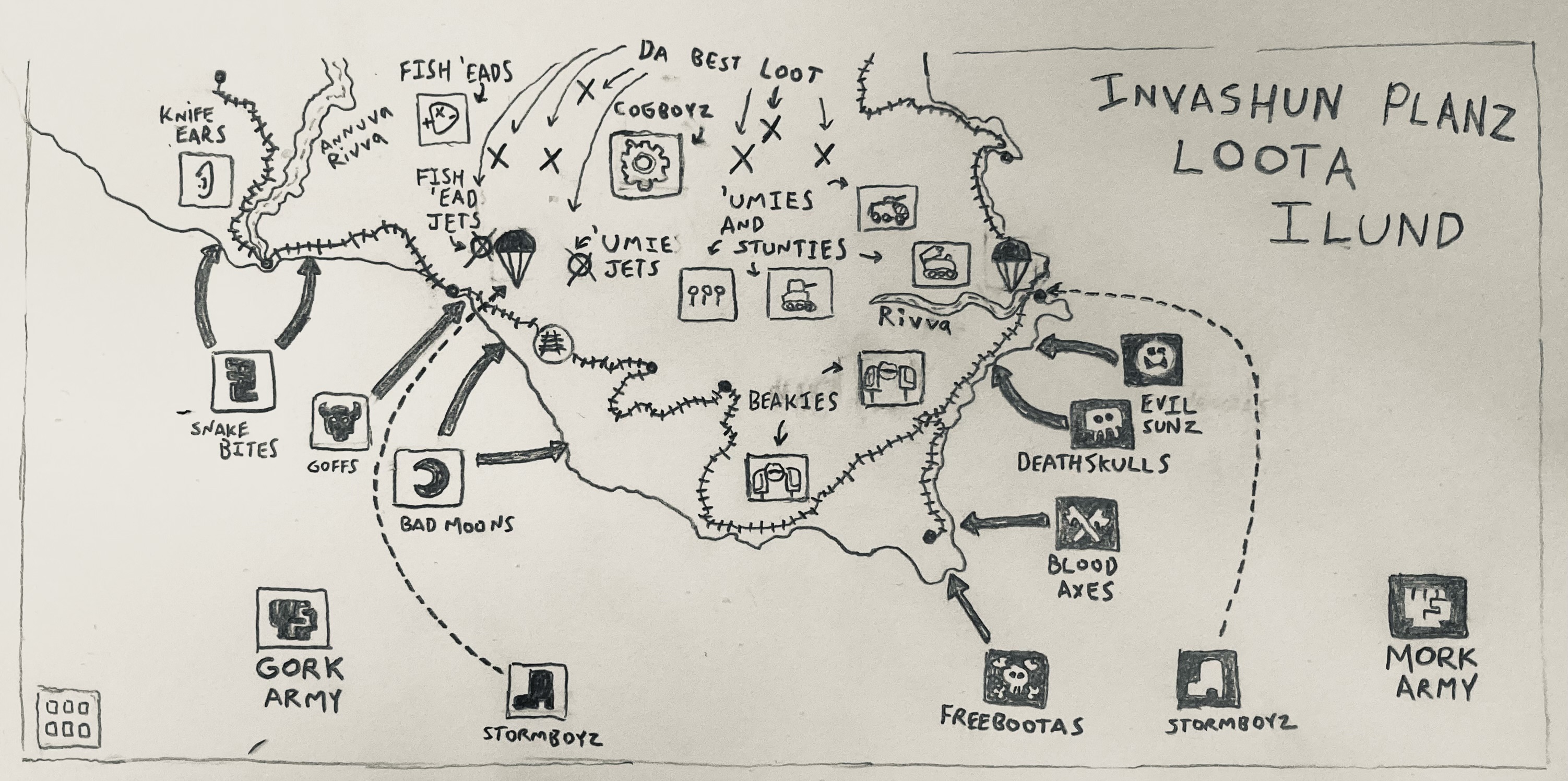
It’s time for the month of Ork-tober 2025 at Drawbridge Games. And we’ve got some fun planned with a month-long event that culminates in an all-day (and maybe much of the night) Mega-Battle on November 1st–which happens to be the Extra Life charity fundraiser day this year. We’re calling the whole thing “Loota Island” and there are going to be a lot of ways for players to participate, from painting to skirmish battles to the big event.
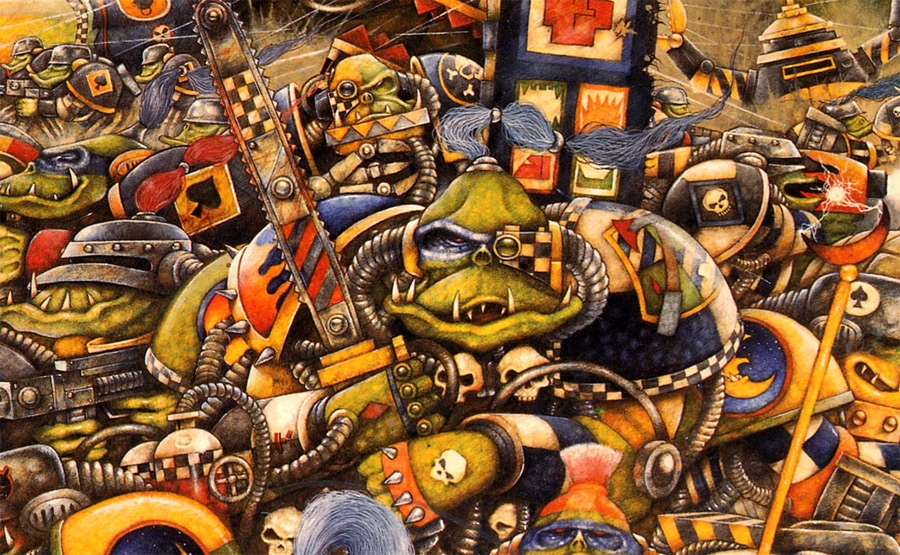
This Orktober we’ll be telling the tale of Loota Island, an Ork invasion of an Imperial Planet that gets supported by some Xenos races cooperating owing to the mass threat of the Orks.
(Don’t worry Chaos folks, a Daemon-cember event will happen again this year and be your change to field some forces; and Tanksgiving will be a time for any and all forces to be a part of one of our big events).
There will be two phases: the building (painting) and loota raids phase, and then the final invasion mega-battle. Participants can field any type of Orks army they like if they want to play on the Orks side, and can choose any of the following to fight on the Imperials+Helpful Xenos side: Space Marines, Sisters of Battle, Adeptus Mechanicus, Adeptus Custodes, Imperial Knights, Imperial Agents, Astra Militarium, Genestealer Cults, Leagues of Votann, T’au Empire, Aledari, and Drukhari.
Participation in various events gives players chances at entry for the prize draw done on the final day at Drawbridge, done in our usual door prize style.
The Loota Raids – Month of Orktober
During the month of Orktober, participants can earn draws in the final drawing in three ways: Painting Progress, playing Loota Raid skirmish missions, and converting (and painting) Looted Vehicles.
For those playing Orks, every squad of Ork infantry (between 3-12 models depending on the box set) that you newly paint during the month of Orktober earns you a draw. Post a pic of the squad assembled/primed either in the store 40k Painting Chat or the Painting section of the Discord, then a pic of the final painted squad.
For those not playing Orks, you get a draw for every vehicle you newly paint during the month of Orktober. Same rules apply: share a before and an after pic to get your draws counted (I’ll track them here on this site).
Players can also do a Loota Raid skirmish mission. This is designed to be a small number of points, and entirely infantry units except for one vehicle on the non-Ork side. Players should discuss points value and match each others’ points as well as they’re able. We recommend no more than 300 points per side of Infantry (the vehicle can be any points value). Players need not field any characters to lead the force, and any characters used cannot be more than 3 wounds.
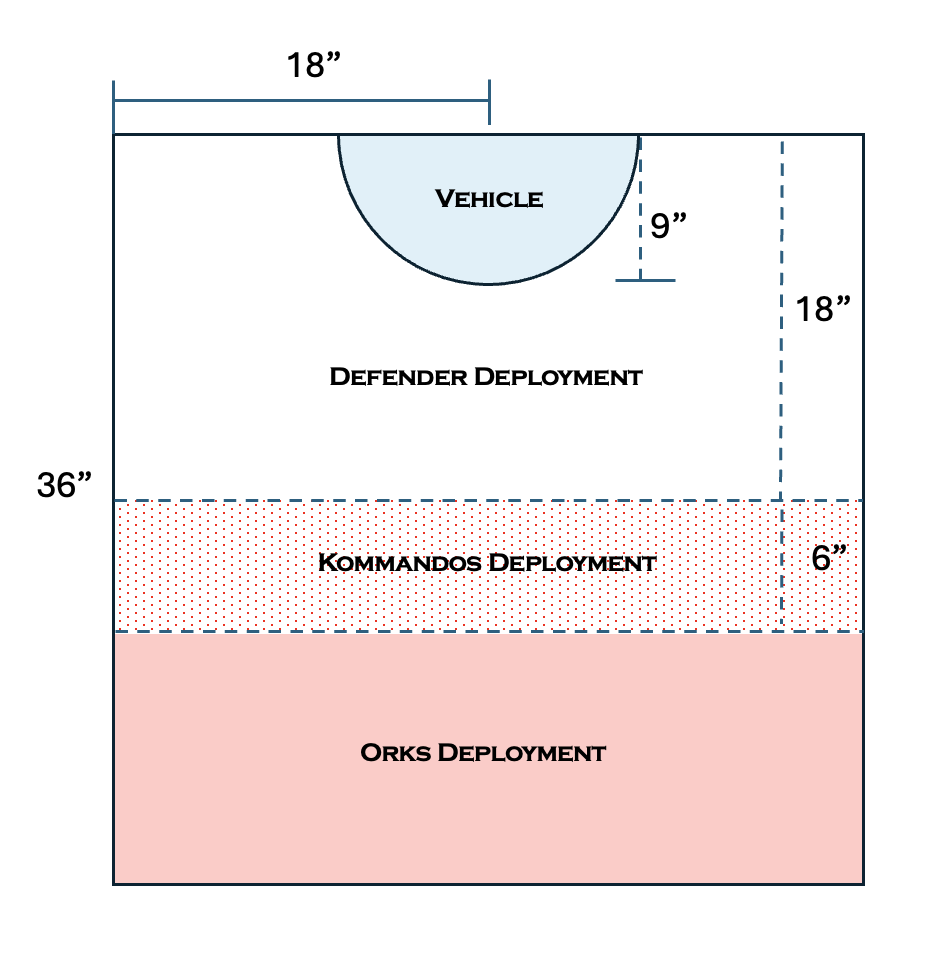
The scenario runs 5 rounds. The deployment map is below, and uses a smaller board size (36″x36″). If the Ork player fields any Kommandos they can be placed in the advanced zone indicated upon deployment.
For the purposes of this mission each model in the unit acts as it’s own unit with separate activations. Think like Kill Team. If the unit has one-use upgrades like Bomb Squigs, those go with a specific model and can only be used by that model. This also includes deployment, so models from the same unit can be spread out all over the battle area as desired. The limitation of not deploying within 9″ of an enemy model is reduced in this mission–models cannot be deployed within 6″ of an enemy model. The defending player deploys a model first and then sides alternate placing models until all are deployed. Models may be placed in reserve as normal with any rules they have. Players then roll off for first turn.
The vehicle begins in the control of the non-Ork defender, but is not “active” at the start of the game. Starting round 2 onward the player can try to “activate” the vehicle by rolling a d6 at the end of the command phase. On turns 2 and 3 the vehicle starts on a 6. Turn 4 it starts on a 5. Turn 5 it starts on a 3. Once a vehicle is activated it can fight as normal in the battle. However, the Ork player can also seize the vehicle. If there is no enemy model within 1″ of the vehicle, an Ork model within 1″ of the vehicle can take an action during the shooting phase instead of shooting to try and commandeer it. They roll a d6. On a 4+ they take control and activate the vehicle (it cannot charge during that turn’s charge phase). The Ork model can commandeer an activated vehicle as well. If the Ork model inflicts 1 or more unsaved wounds on an activated vehicle in melee, then they can roll a d6. On a 6 they get inside and manage to take control. A vehicle under Ork control uses it’s normal stats but replaces all ballistic still values with a 5+, and it loses any special qualities of a vehicle that would come from the nature of the crew of the vehicle (players should agree in advance what those are), and adjust any special rules that mention buffing one’s own army to count for the Orks. If the vehicle is destroyed by either side leave it on the table–it becomes a wreck and counts as impassible terrain for the rest of the game.
The game is a victory for the Orks if they control the vehicle at the end of the game. It’s a narrow victory for the Orks if the vehicle is destroyed (by either side) but no enemy models remain within 12″ of the vehicle at the end of the game. It’s a draw if the vehicle is destroyed (by either side) and enemy models are within 12″ of the vehicle. It’s a victory for the non-Orks if they control the vehicle at the end of the game. Also, note that this mission is likely to be very random and silly, so don’t take it too seriously–and if something is funky and not working right, agree with your opponent how to handle it and focus on having fun.
Playing the mission gains each player one draw in the final drawing. Update the organizers (Andrew) when a game has been played so we can keep track.
If the Ork player gets a victory or a narrow victory they then have the option to “loot” that vehicle for the Extra Life game. The player should acquire their own kit of that vehicle, convert it to a suitably Ork-y version (I encourage thinking about what Ork model it might proxy as, and having those weapon options present too). If they field it at the Extra Life game then it can use the Looted Vehicle rule for the event, and operate with the same rules as the vehicle would normally have except with a 5+ ballistic skill, and would again lose any rules that are dependent upon the nature of the crew (confirm with the organizers). Fielding a vehicle looted in this way nets an Ork player 5 draws in the prize drawing (as winning, then converting, then painting is a big undertaking!).
The Extra Life Invashun Extravaganza
More details on the big event will follow when we get closer to it, but here are the basics. Extra Life is a 24-hour gaming marathon where players can donate money to the Extra Life charity (through the sponsor Drawbridge) for minor advantages in games like re-rolls. It’s a great charity event and Drawbridge has raised thousands of dollars for various charities in the city as a part of it in prior years.
We won’t do a full 24 hours, but we intend to do a pretty long time for the event. The games will be drop-in, drop-out, with an island defended by Imperial forces with contingents of “good” Xenos assisting them being invaded by a flotilla of Ork attackers from both sides. There will be rules for returning destroyed models to play, and players can join for as long or as little as they would like through the day and evening (and maybe early morning). Players can earn draws in the final prize drawing for participating in the event as an Ork player, for participating as an Imperial or Xenos player, and for event-specific missions: every player will get a randomly assigned mission card detailing what they need to do during the mega battle to get their extra draws.
It should be silly fun as always, and we’ll have the full list of how players join, what the possible missions are, and how donations to the Extra Life cause can be used for in-game bonuses. We’ll do the drawing at the end of the event, and participants do not need to be present to win (so even if you cannot make the big event, you can still paint to get draws or play the Loota Raid mission).
So mark November 1st on your calendars to attend during the day and/or evening, and in the meantime get those models built and ready to paint for the month of Orktober!
Ork players please do inform the organizers (Andrew) that you’re planning to play Orks for the event so we can have a good list of who is able to bring what for the event (as we’ll match the size of what forces the Imperials+Xenos side can bring based around our Ork presence). Ork collaborators will get a bonus draw in the drawing, and two draws if they do at least 300 points of Ork infantry new for Orktober (to play the Loota Raid mission!).






 Red Ones Go Faster